

If you have a chipped front tooth, a small gap, or a tooth that’s a slightly different shape than its neighbors, your dentist may suggest either dental bonding or veneers. Both are tooth-colored cosmetic treatments that improve how your smile looks. But they differ a lot in cost, durability, how much of your natural tooth is changed, and how much time the treatment takes.
Here’s a clear comparison to help you decide which fits your goals and budget.
What Is Dental Bonding?
Bonding uses a tooth-colored composite resin, the same material used for white fillings. The dentist:
- Lightly roughens the tooth surface
- Applies a conditioning liquid so the resin sticks
- Sculpts the resin into shape by hand
- Hardens it with a special curing light
- Trims and polishes it to match your natural teeth
The whole process usually takes 30 to 60 minutes per tooth, often in a single visit, and frequently without any numbing.
Common uses for bonding
- Repairing small chips or cracks
- Closing small gaps between teeth
- Making short or uneven teeth look more even
- Covering small stains or spots that whitening can’t fix
- Protecting exposed roots from gum recession
What Are Veneers?
Veneers are thin shells, usually made of porcelain, bonded to the front surface of teeth. Traditional porcelain veneers are made in a dental lab after the dentist removes a thin layer of enamel. There are also composite veneers, which are essentially bonding applied to cover the entire front surface. For a deeper look at pricing, see how much dental veneers cost.
Common uses for veneers
- Changing the color of teeth with deep stains
- Reshaping multiple teeth for a more uniform smile
- Closing larger gaps
- Covering worn, chipped, or slightly crooked teeth
- Full smile makeovers
Side-by-Side Comparison
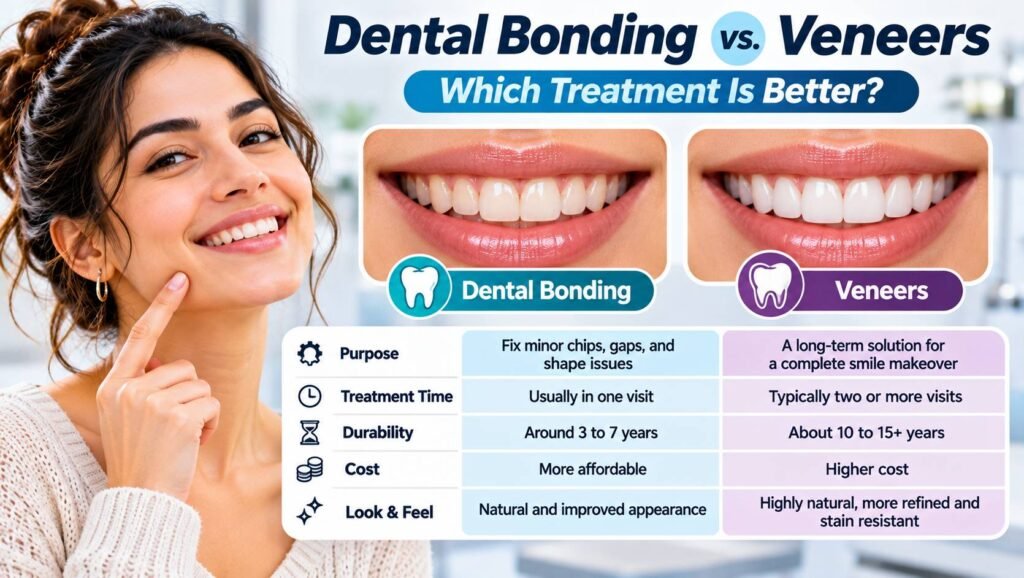
| Factor | Dental bonding | Porcelain veneers |
|---|---|---|
| Typical cost per tooth | About $200 – $700 | About $900 – $2,500 |
| Number of visits | Usually 1 | Usually 2 – 3 |
| Enamel removal | Little or none | Usually a thin layer, often around 0.5 mm |
| Reversible? | Often, mostly | No, for traditional veneers |
| Typical lifespan | About 3 – 10 years | About 10 – 15+ years |
| Stain resistance | Can stain over time | Highly stain-resistant |
| Chip risk | Higher | Lower, but can still chip |
| Best for | Small fixes on one or a few teeth | Bigger changes, several teeth |
Prices and lifespans are general and vary by dentist, location, and how well the work is cared for.
Advantages of Bonding
- Lower cost. Often a fraction of the price of porcelain.
- Fast. Usually done in one visit.
- Conservative. Little to no enamel removed, so your natural tooth is preserved.
- Easy to repair. Chips can often be patched with more resin.
- Great for small, single-tooth fixes.
Disadvantages of Bonding
- Stains more easily, especially with coffee, tea, red wine, and smoking.
- Less durable. More likely to chip, particularly on biting edges.
- Shorter lifespan, needing touch-ups or replacement more often.
- Results depend on the dentist’s hand skill, since it’s sculpted freehand.
Advantages of Veneers
- Long-lasting with good care.
- Stain-resistant porcelain keeps its color well.
- Very natural appearance in skilled hands, with light-reflecting qualities similar to enamel.
- Bigger transformations possible, including shape, length, and color changes across many teeth.
Disadvantages of Veneers
- Higher cost, and usually not covered by insurance.
- Irreversible for traditional veneers, since enamel is removed.
- More visits and a wait for lab fabrication.
- Can chip or come off, and repairs usually mean replacing the veneer.
- Possible sensitivity after enamel removal.
Which One Should You Choose?
Bonding may be the better fit if:
- You have a small chip, gap, or spot on one or two teeth
- You want a fast, affordable fix
- You’d prefer to keep your natural enamel intact
- You’re young and want to delay irreversible treatment
- You’re testing a look before committing to veneers
Veneers may be the better fit if:
- You want to change the color or shape of several teeth
- You have deep stains that whitening and bonding can’t hide
- You want a long-lasting, highly polished result
- You’re willing to invest more for durability
Many people combine treatments: whitening first, then bonding on one chipped tooth, for example. Your dentist can help you plan a sequence.
What About Whitening First?
Bonding and veneers don’t respond to whitening. If you want your teeth whiter overall, whiten first, then match the bonding or veneers to your new shade. Our guide to teeth whitening options explains how.
What About Orthodontics?
If your teeth are crooked or crowded, bonding and veneers can make them look straighter, but they don’t move teeth. Clear aligners or braces can often fix alignment while keeping your natural teeth intact. Sometimes a short course of orthodontics before bonding or veneers produces a better and more conservative result. See Invisalign vs. braces.
Caring for Bonding and Veneers
- Brush twice daily with a soft brush and non-abrasive toothpaste.
- Floss daily, especially along the edges near the gums.
- Limit dark drinks, especially with bonding, and rinse with water after.
- Don’t bite nails, pens, or ice.
- Wear a night guard if you grind your teeth.
- Wear a mouthguard for sports.
- Keep regular cleanings; ask your hygienist to polish bonded areas.
Will Insurance Cover Either?
Purely cosmetic bonding and veneers usually aren’t covered. Bonding to repair a chipped tooth or protect an exposed root may be partly covered as a restorative procedure. Ask your dentist to check with your insurer. For more on coverage, see our dental insurance guide.
Choosing the Right Dentist
Cosmetic results depend heavily on the dentist’s eye for shape, color, and proportion. Ask to see before-and-after photos of their own patients, and ask how often they do bonding and veneer cases. Our article on finding a cosmetic dentist walks through what to look for.
A Common Path: Start Small, Upgrade Later
Many patients start with bonding in their twenties or thirties because it’s affordable and keeps their enamel intact. Years later, if the bonding has stained or chipped and they want a more lasting result, they move to porcelain veneers. This approach spreads out cost and keeps options open. The reverse is harder: once enamel has been removed for traditional veneers, going back to bonding alone usually isn’t possible. If you’re unsure, starting with the more conservative option is often the safer choice.
Questions to Bring to Your Consultation
- Is my problem better suited to bonding, veneers, or something else?
- How much enamel, if any, will you remove?
- How long should I expect this to last?
- What will it cost now, and what might maintenance cost later?
- Can I see examples of similar cases you’ve done?
- What happens if it chips?
Helpful sources
Medical disclaimer: This article is for general information only and is not a substitute for professional dental or medical advice, diagnosis, or treatment. Always talk with a licensed dentist or physician about your specific situation. If you have severe pain, swelling, or trouble breathing or swallowing, seek emergency care right away. Costs mentioned are general estimates and vary by location, provider, and insurance plan.
Frequently Asked Questions
Is dental bonding cheaper than veneers?
Yes. Bonding usually costs about $200 to $700 per tooth, while porcelain veneers often cost about $900 to $2,500 per tooth.
How long does dental bonding last?
Bonding often lasts about 3 to 10 years, depending on its location, your bite, and habits like coffee drinking or nail biting.
Does bonding damage your teeth?
Bonding usually requires little or no enamel removal, so it's one of the most conservative cosmetic treatments.
Can bonding be whitened?
No. Composite resin doesn't respond to whitening, so whiten your natural teeth before bonding if you want a lighter shade.
Which looks more natural, bonding or veneers?
Both can look very natural. Porcelain veneers usually keep their shine and color longer, while bonding can dull or stain over time.
Can bonding be replaced with veneers later?
Yes. Many people start with bonding and later move to veneers if they want a longer-lasting or more extensive change.